Build. Swap. Replay.
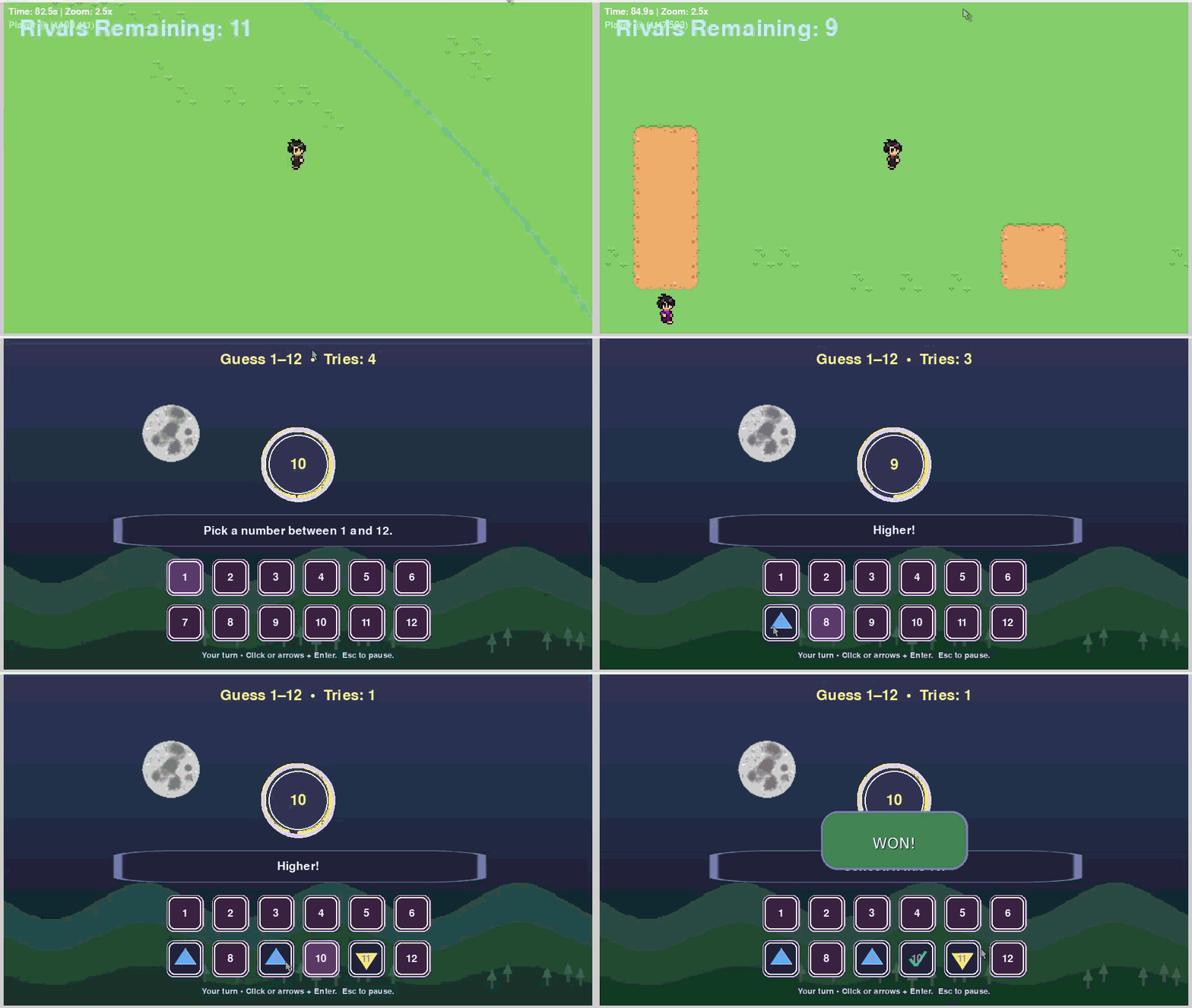
Retro Royale is a battle-royale experiment built around short, randomized minigame duels instead of a traditional weapon-based elimination loop. Every layer is modular: maps, sounds, modes, assets, and the minigames that drive the run can be swapped without rewriting the core system. The goal is a game that evolves over time with a community while keeping its identity intact. competitive sessions or single-player runs against the clock.
Remix-Ready Pipeline
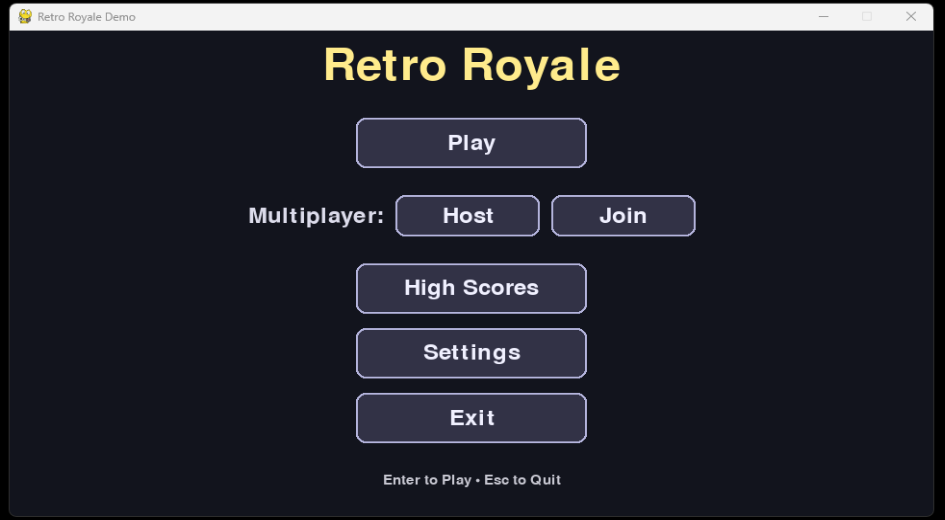
The pipeline is tuned for fast iteration: drop in new minigames, rulesets, maps, and presentation layers without rebuilding the whole game. That opens the door for seasonal twists, community mods, and experimental content drops while keeping the loop stable and easy to expand.
Ever wonder who the best gamer is? The friend who always wins in fighting games but can’t aim in a first-person shooter to save his life? Or the player who can jump into any genre and stay fairly competitive. That’s the Regulation Gamer in my opinion—a student of all, master of none. Regulation Royal exists to settle that debate somewhat by testing skill across different mechanics and game styles.
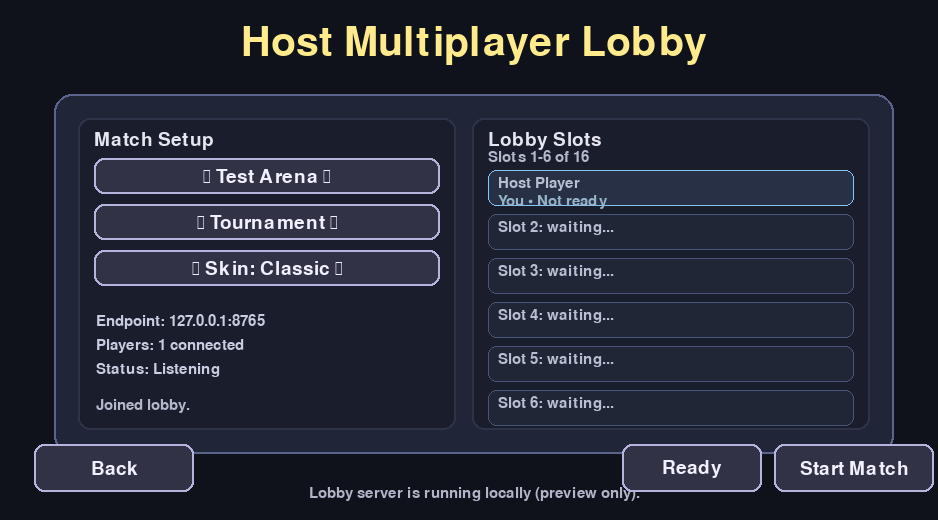
Expect classic tournament-style minigame brackets and a battle-royale run where players challenge each other to random minigames; winners advance until one remains in the interactive arena. 16 players is the current working number, not the final target. A speedrunning-friendly solo mode with a time scoreboard for practicing, plus multiplayer sessions for a competitive or just a friendly game night.
- Plug-in minigames without touching the core run loop
- Swap maps and tilesets to remix the arena quickly
- Drop in new asset packs (FX, UI, music) per season
- Toggle rule-sets and modes for rapid event variants
- Prototype character skins + loadouts (no ability system yet)
- Multiplayer-friendly dev pipeline for client-hosted or headless servers

The current prototype is using Python 3 with the Pygame library as the base. It may not be the final language as performance is not optimal, but I like Python for development because it’s where a lot of people start to learn. The project stays easy to learn, easy to mod, and friendly for new and experienced developers. The goal is a game that’s fun to play and easy to extend, whether you’re scripting a new mini game or creating a skin and sharing it however you like.
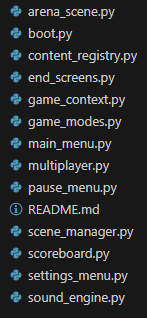
Under the hood, the structure is simple and modular: a scene stack drives menus and arenas, game modes act as controllers (tournament brackets or battle-royale flow), and minigames are self-contained modules that plug in through a shared API. Maps and settings are JSON-backed, and multiplayer is prototyped with asyncio TCP plus threading so networking stays off the render loop.
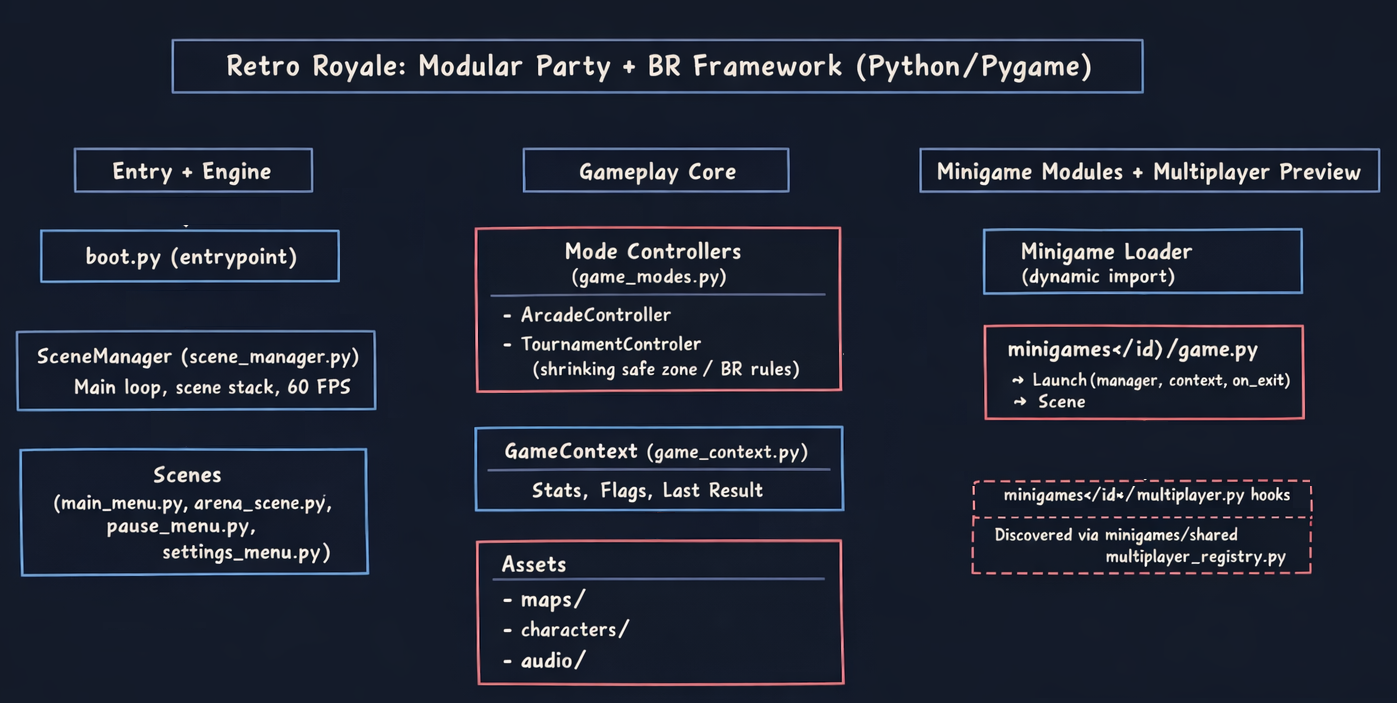
Retro Royale is the first step in the bigger Regulation Royal vision: an open-source module party game that blends battle-royale structure with rotating minigames for competitive sessions or game-night vibes. I’m starting with a 2D, old-school style because it keeps the scope lean, the mechanics simple, and the retro aesthetic gives the regulation royal its first retro framework style and feel.
Retro Royale is also my take on active entertainment. Many of the first minigames are inspired by the oldest games we have played: gesture-based classics like rock-paper-scissors, physical pieces like dominoes and dice, and early electronic or digital staples like Pong. Even with around 20 minigames to start, the mechanics, style, and combinations can expand endlessly.
Launching with a retro build is the fastest way to bring the idea to life and prove the core loop. Once the foundation is fun and stable, it can expand into other styles and scales while keeping the same Regulation Royal DNA.
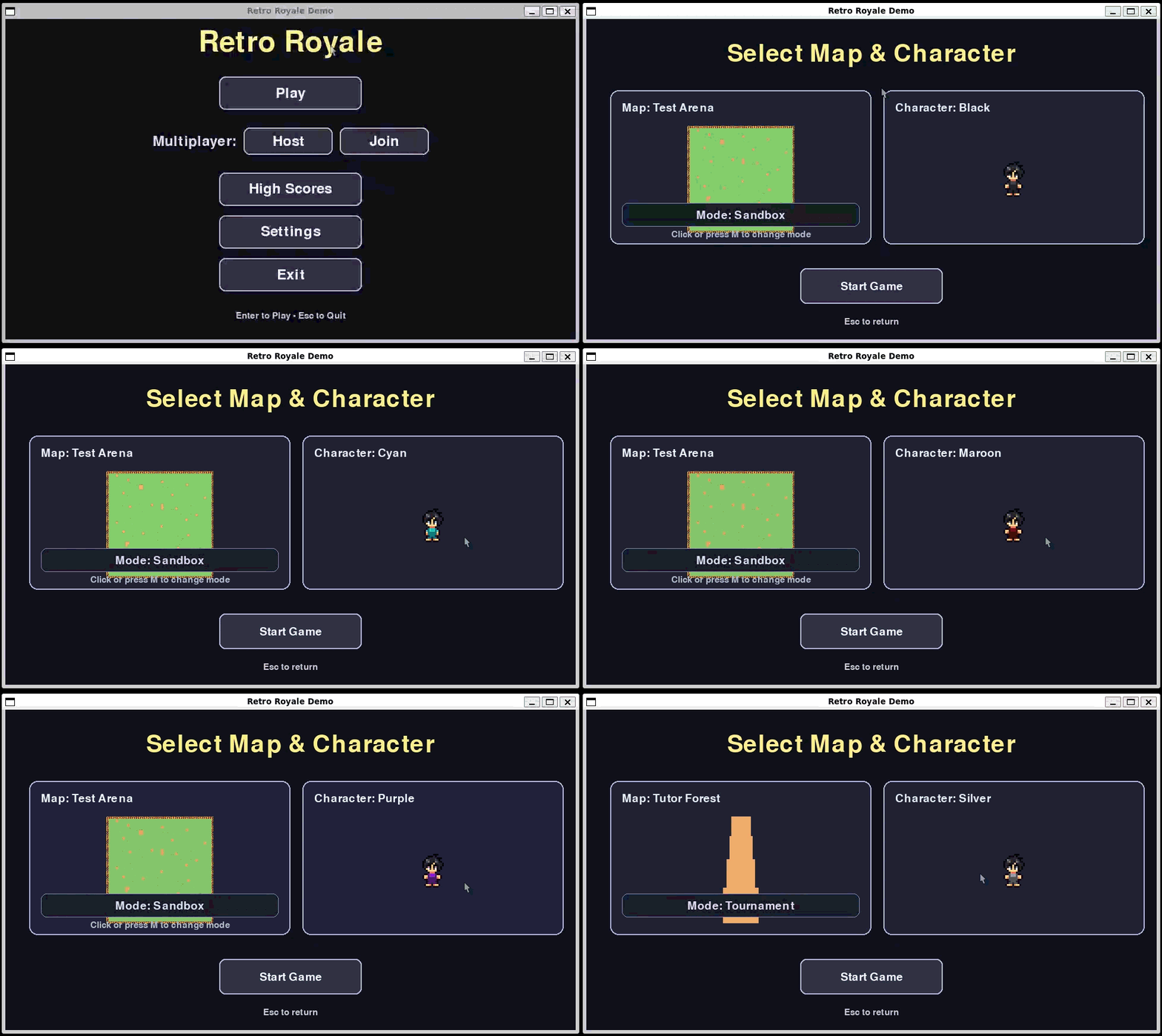
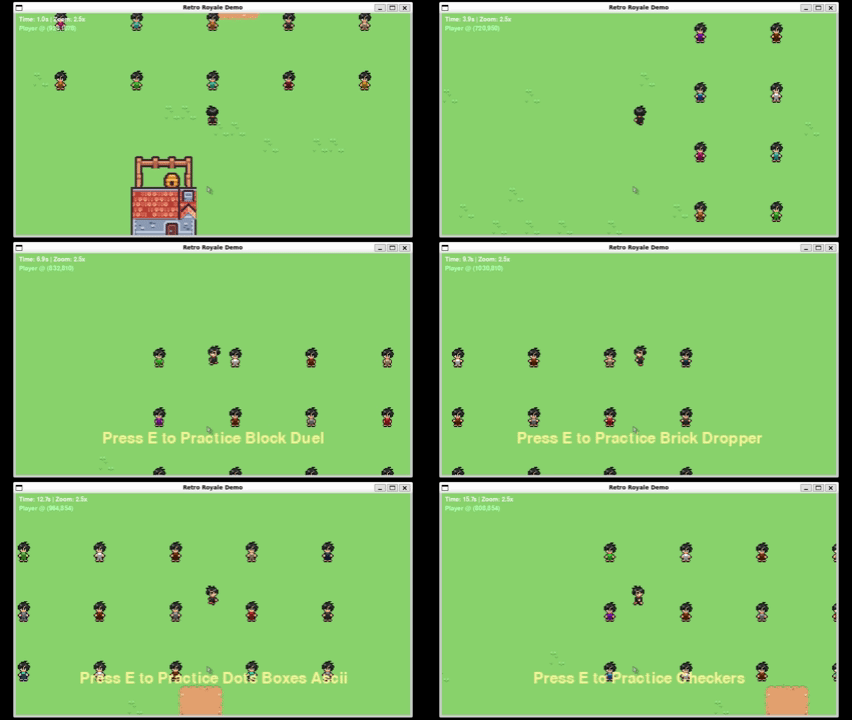
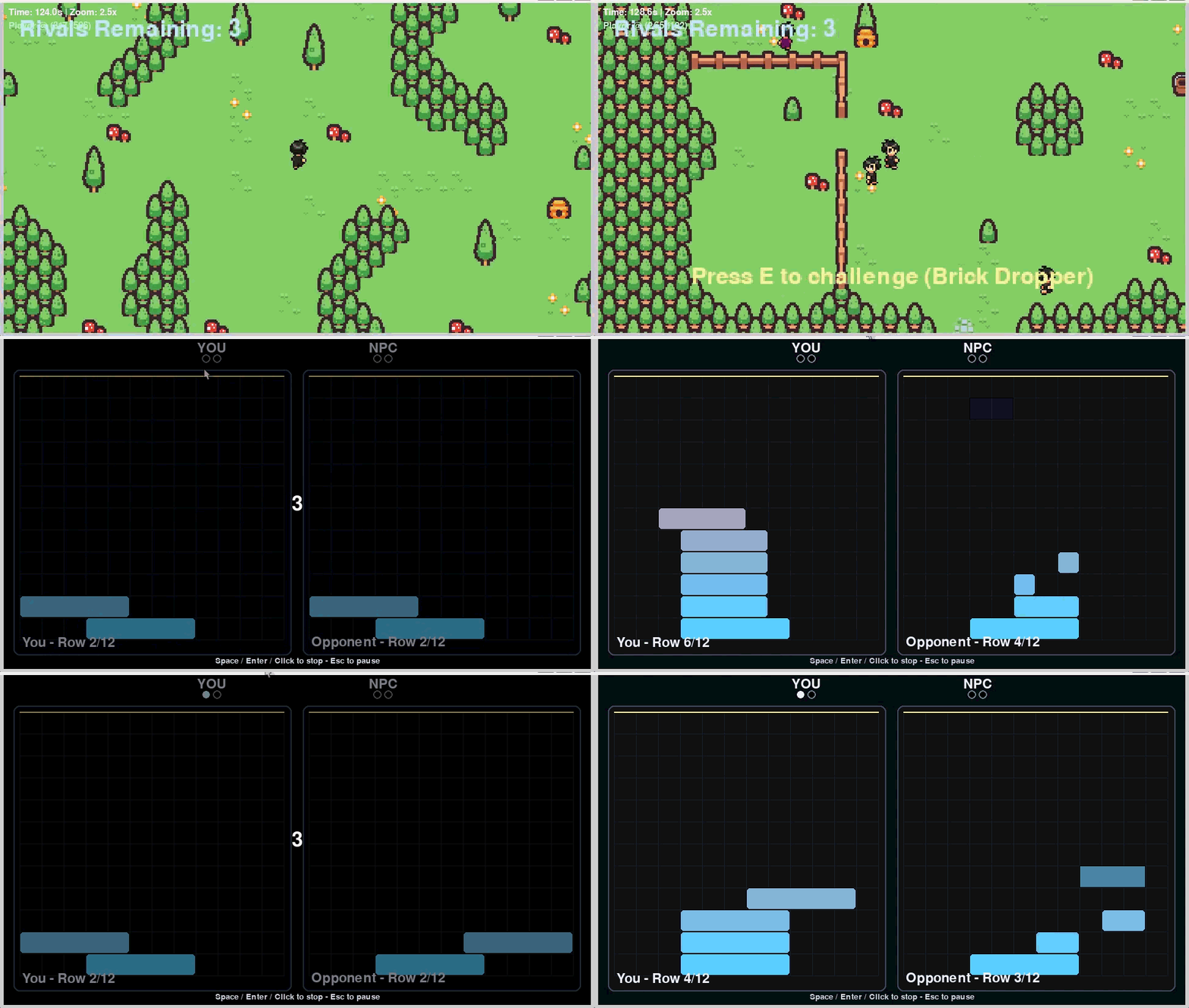
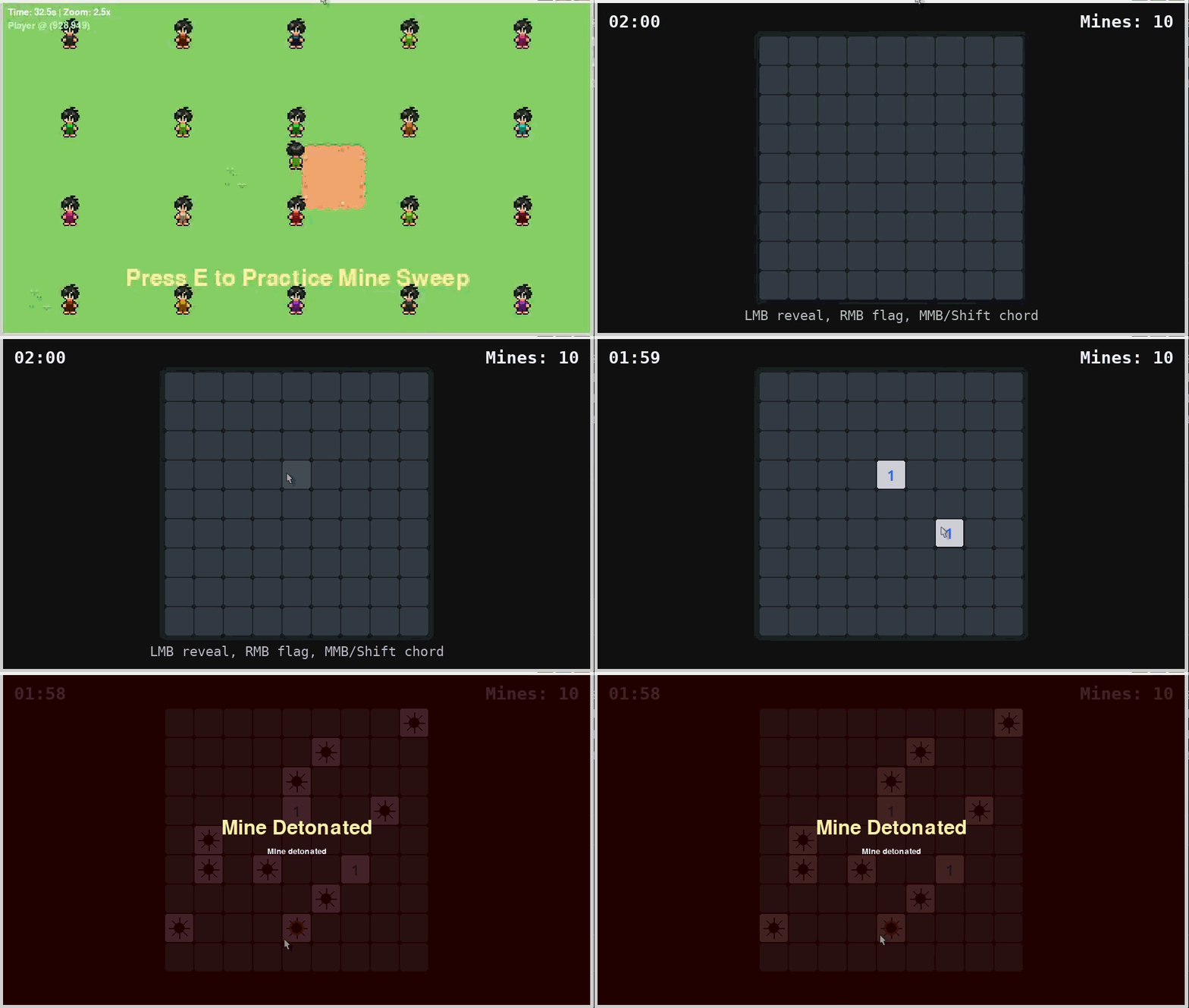
The current build is a proof of concept: a simple text-first menu and UI that loads into the arena for single-player or multiplayer. From there, the run loop can drive Sandbox play or Tournament-style flow, depending on the selected map and mode.
Most of the focus so far has been on making the loop real: basic win/lose handling across ~25 minigames, lightweight validation, and a small web server for local testing. Some minigames were created earlier and still need more standardization and real assets, and a few core files still need to be modularized further.
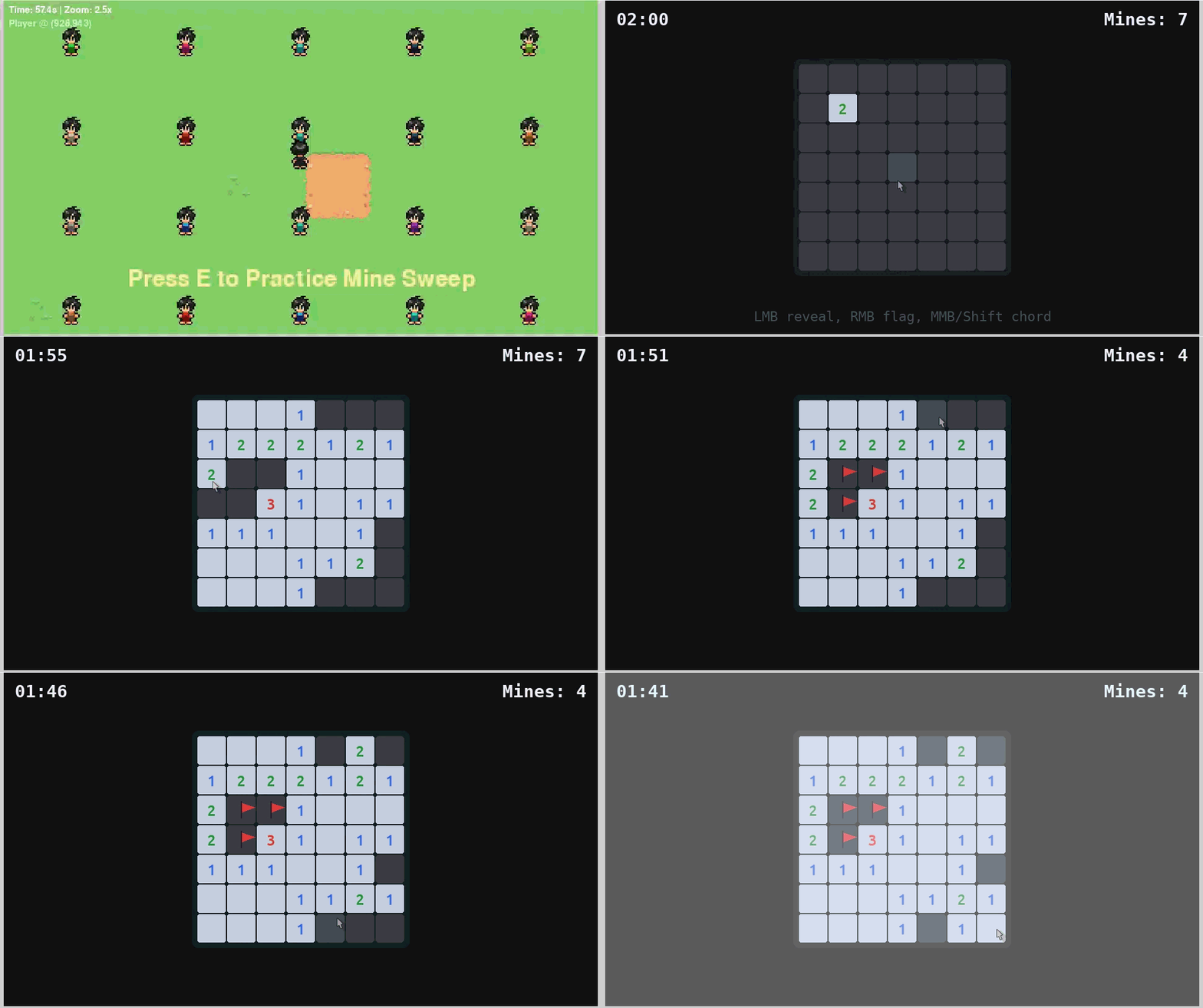
Next, I want to tighten the framework first: unify the minigame API, modularize remaining systems, and make the main mechanics solid and predictable. That means better consistency across minigames, cleaner mode controllers, and multiplayer plumbing that’s dependable before any heavy polish.
Once the foundation is locked in, I’ll shift toward minigame finalization, presentation—UI improvements, better feedback, and upgraded graphics/assets—without breaking compatibility with existing minigames and community content.
I’m just your average South Florida guy. I started college as an engineering student and didn’t finish my BS. I’ve worked on and off in my family’s business, which is in the event rental industry.
Most days I’m a driver and day to day operations for small to medium sized events with the occasional small IT fix when it’s needed. I’ve also spent time on the food side of the event world through a large university’s in-house catering operations as a lead, and I worked in private aviation as a lead ground technician at a private-aircraft FBO. All of that has been great and helped me manage professional projects, but it’s just been experience.
Retro Royale is my first real personal project in my 30 years so far. Game dev is a newer skill for me, but it’s the perfect place to combine the things I’ve picked up and love: coding (not great), game mechanics, networking, and hands-on design—plus some 3D printing. Those are just a few of my hobbies, alongside plenty of other interests.